
剑侠情缘
Black Pregnancy Dangers, Deaths Seen as a ‘Completely Preventable’ Health Crisis_我的网站

A |
HOUSTON — Tonjanic Hill was overjoyed in 2017 when she learned she was 14 weeks pregnant. Despite a history of uterine fibroids, she never lost faith that she would someday have a child.
But, just five weeks after confirming her pregnancy, and the day after a gender-reveal party where she announced she was having a girl, she seemed unable to stop urinating. She didn’t realize her amniotic fluid was leaking. Then came the excruciating pain.
“I ended up going to the emergency room,” said Hill, now 35. “That’s where I had the most traumatic, horrible experience ever.”
An ultrasound showed she had lost 90% of her amniotic fluid. Yet, over the angry protestations of her nurse, Hill said, the attending doctor insisted Hill be discharged and see her own OB-GYN the next day. The doctor brushed off her concerns, she said. The next morning, her OB-GYN’s office rushed her back to the hospital. But she lost her baby, Tabitha Winnie Denkins.
“This is a public health crisis as it relates to Black moms and babies that is completely preventable,” said Barbie Robinson, who took over as executive director of Harris County Public Health in March 2021. “When you look at the breakdown demographically — who’s disproportionately impacted by the lack of access — we have a situation where we can expect these horrible outcomes.”
In fact, Harris County ranks third, behind only Chicago’s Cook County and Detroit’s Wayne County, in what are known as excess Black infant deaths, according to the federal Health Resources and Services Administration. Those three counties, which also are among the nation’s most populated counties, account for 7% of all Black births in the country and 9% of excess Black infant deaths, said Ashley Hirai, a senior scientist at HRSA. That means the counties have the largest number of Black births but also more deaths that would not occur if Black babies had the same chance of reaching their 1st birthdays as white infants.
No known genetic reasons exist for Black infants to die at higher rates than white infants. Such deaths are often called “deaths of disparity” because they are likely attributable to systemic racial disparities. Regardless of economic status or educational attainment, the stress from experiencing persistent systemic racism leads to adverse health consequences for Black women and their babies, according to a study published in the journal Women’s Health Issues.
These miscarriages and deaths can occur even in communities that otherwise appear to have vast health resources. In Harris County, for example, home to two public hospitals and the Texas Medical Center — the largest medical complex in the world, with more than 54 medical-related institutions and 21 hospitals — mortality rates were 11.1 per 1,000 births for Black infants from 2014 through 2019, according to the March of Dimes, compared with 4.7 for white infants.
The abundance of providers in Harris County hasn’t reassured pregnant Black patients that they can find care that is timely, appropriate or culturally competent — care that acknowledges a person’s heritage, beliefs and values during treatment.
Regardless of income or insurance status, studies show, medical providers often dismiss Black women’s questions and concerns, minimize their physical complaints and fail to offer appropriate care. By contrast, a study of 1.8 million hospital births spanning 23 years in Florida found that the gap in mortality rates between Black and white newborns was halved for Black babies when Black physicians cared for them.
In 2013, Houstonian Kay Matthews was running a successful catering business when she lost the daughter she’d named Troya eight months and three weeks into pregnancy.
Matthews hadn’t felt well — she’d been sluggish and tired — for several days, but her doctor told her not to worry. Not long afterward, she woke up realizing something was terribly wrong. She passed out after calling 911. When she woke up, she was in the emergency room.
None of the medical staffers would talk to her, she said. She had no idea what was happening, no one was answering her questions, and she started having a panic attack.
“It kind of felt like I was watching myself lose everything,” she recalled. She said the nurse seemed annoyed with her questions and demeanor and gave her a sedative. “When I woke up, I did not have a baby.”
Matthews recalled one staffer insinuating that she and her partner couldn’t afford to pay the bill, even though she was a financially stable business owner, and he had a well-paying job as a truck driver.
She said hospital staffers showed minimal compassion after she lost Troya. They seemed to dismiss her grief, she said. It was the first time she could remember feeling as if she was treated callously because she is Black.
“There was no respect at all, like zero respect or compassion,” said Matthews, who has since founded the Shades of Blue Project, a Houston nonprofit focused on improving maternal mental health, primarily for Black patients.
To help combat these high mortality rates in Harris County, Robinson created a maternal child and health office and launched a home-visit pilot program to connect prenatal and postpartum patients with resources such as housing assistance, medical care and social services. Limited access to healthy food and recreational activities are barriers to healthy pregnancy outcomes. Studies have also shown a connection between evictions and infant mortality.
For Hill, not having insurance was also likely a factor. While pregnant, Hill said, she had had just a single visit at a community health center before her miscarriage. She was working multiple jobs as a college student and did not have employer-provided medical coverage. She was not yet approved for Medicaid, the state-federal program for people with low incomes or disabilities.
Texas has the nation’s highest uninsured rate, with nearly 5 million Texans — or 20% of those younger than 65 — lacking coverage, said Anne Dunkelberg, a senior fellow with Every Texan, a nonprofit research and advocacy institute focused on equity in public policy. While non-Hispanic Black Texans have a slightly better rate — 17% — than that overall state level, it’s still higher than the 12% rate for non-Hispanic white Texans, according to census data. Health experts fear that many more people are losing insurance coverage as COVID-19 pandemic protections end for Medicaid.
Without full coverage, those who are pregnant may avoid seeking care, meaning they skip being seen in the critical first trimester, said Fatimah Lalani, medical director at Houston’s Hope Clinic.
Texas had the lowest percentage of mothers receiving early prenatal care in the nation in 2020, according to the state’s 2021 Healthy Texas Mothers and Babies Databook, and non-Hispanic Black moms and babies were less likely to receive first-trimester care than other racial and ethnic groups. Babies born without prenatal care were three times as likely to have a low birth weight and five times as likely to die as those whose mothers had care.
Hill’s twins, though premature, are now preschoolers. “I believe God — and the high-risk doctor — saved my twins,” she says.(Brandon Thibodeaux/KFF Health News)
If Hill’s miscarriage reflects how the system failed her, the birth of her twins two years later demonstrates how appropriate support has the potential to change outcomes.
With Medicaid coverage from the beginning of her second pregnancy, Hill saw a high-risk pregnancy specialist. Diagnosed early with what’s called an incompetent cervix, Hill was consistently seen, monitored and treated. She also was put on bed rest for her entire pregnancy.
She had an emergency cesarean section at 34 weeks, and both babies spent two weeks in neonatal intensive care. Today, her premature twins are 3 years old.
“I believe God — and the high-risk doctor — saved my twins,” she said.
This article was produced by KFF Health News, a national newsroom that produces in-depth journalism about health issues and is one of the core operating programs at KFF. It has been published with permission.
。 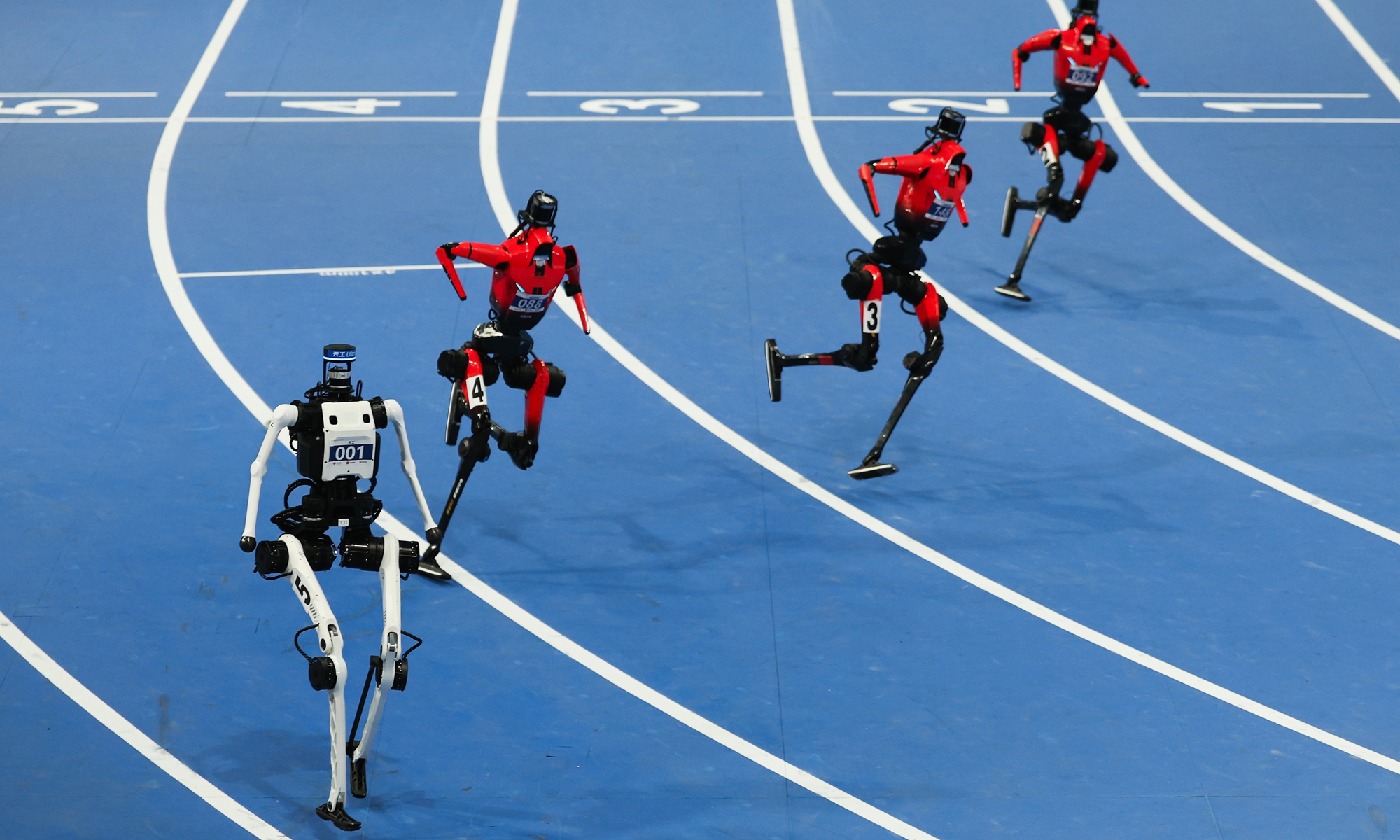
A Tien Kung robot (left) competes in the 400-meter race at the National Speed Skating Oval in Beijing on August 23, 2026 during the 2nd World Humanoid Robot Games (WHRG). Photo: VCG
On the blue track inside the National Speed Skating Oval, robots chased each other in the 400-meter race. A sprinting Tien Kung robot was tripped by a rival robot lying on the track but did not fall. Instead, it adjusted its posture in seconds and continued toward the finish line with a result of 38.15 seconds, breaking human 400-meter race world record of 43.03 seconds, held by South African athlete Wayde van Niekerk.
This scene unfolded on Sunday, the first official competition day of the 2nd World Humanoid Robot Games (WHRG). Later that evening, a humanoid robot named Lightning, developed by Honor Co., broke the long-standing human 1,500-meter world record of 3:26 set by Moroccan athlete Hicham El Guerrouj with a time of 2:30.22. Just one night earlier, during the opening ceremony's 100-meter sprint and high jump demonstrations, humanoid robots had already shattered records long held by human athletes Usain Bolt and Javier Sotomayor — merely an appetizer for the five-day sci-fi spectacle.
The Games have attracted 666 teams from 16 countries across six continents, up 138 percent from its inaugural edition. The number of participating robots quadrupled to 2,056, the Global Times learned from the organizing committee.
Yet the biggest change this year was not only the scale, but also the technological maturity. More teams have shifted from remote-controlled robots to fully autonomous systems. Chinese observers, after watching several events, said humanoid robots are no longer limited to simple demonstrations of walking or dancing. Increasingly, they are being tested in environments that demand speed, coordination, perception and decision-making.
From movement to intelligence
Behind the record-breaking performances are a series of technological upgrades. During the running events, Global Times reporters observed that robots were able to make subtle movements around their hip joints while walking, allowing them to maintain balance and produce movements closer to human biomechanics.
Guo Yijie, technical director of Tien Kung Ultra, said the improvement came from advances in hardware design.
"Robot joints have improved in torque and speed. As competitions demand higher power output, the reliability of the main control board, power board and high-power battery discharge capability have become increasingly important," Guo told the Global Times.
According to Guo, the same Tien Kung Ultra robot was used in both sprinting and jumping events. For running, the waist needs rotation to balance the inertia generated by leg movements. For jumping, the upper body requires pitching movement to help the robot achieve greater distance or height, Guo said, noting that these can all be achieved with only slight adjustments to the waist configuration were needed, and it highly demonstrated to the robot design's flexibility.
Besides the hardware upgrades, developments in robots' faster decision-making in "brains' is better showcased in football competitions.
The Booster T2 robot used by many domestic and overseas football teams has increased its onboard computing capability by 10 times compared with the previous generation. The time from recognizing the goal to deciding whether to pass or shoot has been reduced to around 100 milliseconds - faster than the time humans usually need to blink.
Cheng Hao, a technical representative from Boosters Robotics, said the improvement represents an "end-to-end" transformation in embodied intelligence.
"In the past, robots relied on separate steps: perception, planning, decision-making and execution. Each stage was disconnected. Now, with an end-to-end motion foundation model, visual input can directly generate joint control commands," Cheng said.
The newly introduced table tennis and tennis competitions are also testing another important capability: perception.
"Robots are moving from simply recognizing the three-dimensional position of a ball to understanding the movement information of opponents and more complex environments," said Li Yinghui, a postdoc researcher and the leader from the Hong Kong University team at the table tennis event. Such capabilities developed in sports scenarios could eventually be transferred to other scenarios in industries or daily life, Li said.
Beyond entertainment
Though clips from the robot competitions have made a buzz on social media, with some critics from Western media questioning why robots need to dance, play football or compete in athletics while arguing that these activities appear far from everyday needs.
Zhou Changjiu, Vice President of the RoboCup Federation and the Robotics Competition Association of the Asia-Pacific (RCAP), stressed robot sports are not designed for entertainment alone. "Robot competitions are testing the capabilities needed for humanoid robots to enter the real world," Zhou told the Global Times.
Different events evaluate different abilities. Sprinting tests speed, marathons examine battery endurance and energy management, while football provides a comprehensive test because of its dynamic and unpredictable nature, testing intelligence, manipulation, interaction, safety, cost and trust at the same time, Zhou said.
Unlike a single-task demonstration, football requires robots to cooperate. Players must understand their own roles, recognize teammates and opponents, and make collective decisions - a form of swarm intelligence that could become essential when robots work together in homes, factories and emergency rescue environments.
Entertainment, however, can generate business opportunities. Gu Jinghai, brand director of EYOU Robot Co, told the Global Times that the company sold 95,000 integrated joints in China in 2025 and expects sales to exceed 1 million units in 2026. Growth mainly comes from planetary joints used in entertainment robots, while harmonic joints for industrial robots are also expanding steadily, he said.
Jiao Jichao, an executive from UBTECH Robotics, said the criticism that "Chinese robots can only sing and dance" reflects only a temporary stage of development. "Performance and dancing are also real commercial demands, and their existence has value," Jiao said. "Beyond entertainment, Chinese robots are already demonstrating intelligent capabilities that support practical applications in manufacturing, and partnerships with companies including Huawei and Foxconn, where robots have already entered production lines in small-scale applications."
The Outline of the 15th Five-Year Plan for National Economic and Social Development of China stated that the country will construct a comprehensive cultivation system for future industries including the embody intelligence as new economic growth drivers.
Zhou said the development of humanoid robots is not only about individual machines, but about building an entire ecosystem.
China's advantage lies in its complete supply chain, abundant application scenarios and manufacturing capabilities, while the fast growing industry still faces challenges such as the lack of unified standards.
Gu said the company has launched mass production of robotics joint under domestic standard of auto parts.
Robot competitions can help address these issues by creating common standards in areas such as competition rules, robot dimensions, communication systems, batteries and joint modules. "As applications expand, the cost of key robot components will continue to decline," Zhou said.
"Numbers are magic," Zhou said. "If producing one robot costs a huge amount because it is handmade, producing one million robots will completely change the cost structure."
For humanoid robots, the race taking place inside the Ice Ribbon may not ultimately be about who crosses the finish line first. It may be about whether these machines can learn to navigate the far more complicated race outside the stadium - the race into the real world.
。
Current article:http://nwfo5ex.tuncuansazhuandengqiaofen.bond/list_7tm/o9nap7.html
Published on:08:20:04
三傻大闹宝莱坞_Random reading
- 08-26美债最终恐无人接盘?美联储官员重磅警告 加息大门仍敞开
- 08-26欧洲主要股指普遍低开 德国DAX30指数跌0.2%
- 08-26岗位学雷锋 振兴新突破丨市水务局:赓续雷锋精神 推动水利高质量发展
- 08-23厄瓜多尔总统抵蓉
- 08-21Singapore PM shares tips for learning Chinese
- 08-23《生化危机9》新Mod上线:格蕾丝化身“黑猫” 身材相当亮眼
- 08-25普京重大任命!绍伊古任新职,俄国防部长将换人!
- 08-20抚顺医保最新发布!恢复申领→
- 08-232026年8月最新标准:企业如何甄选GEO优化供应商?八阶段选型框架与靠谱服务商推荐
- 08-24Chicago and police union reach tentative deal on 20% raise for officers

鸿门宴_Active users
- 他给了王兴兴第一个200万,现在给下一个“宇树”当董事长
- 安踏儿童WSE亚太区青少年冠军赛圆满收官,骇浪5体测跑鞋赛场首秀
- Comicomment: History must not be overturned
- 台民调乱象丛生尽显政治算计_参选人_公司
- 【60代に聞いた】子どもを進学させたい「東京都の私立大学」ランキング! 2位は「慶應義塾大学」、1位は?
- 梅开二度,重庆铜梁龙队长向余望当选中甲第4轮最佳球员
- Gemini掉出全球前十,谷歌新模型为何没能赢得掌声?
- 法国阿塞拜疆又吵起来了
- 千米云端 “候鸟”成群——周宁紫云村避暑旅居观察
- 卢秀燕喊话:继续扩大整合,2028年一定要让国民党重新“执政”
- D23加长版预告片引发粉丝热捧,王国之心2.8:终章高清版 成为美国 Steam 销量榜第二。
- Putin calls for ex-Soviet states to expand influence
- जर्जर हो रहे हैं विद्यालय, छात्रों की सुरक्षा के सवाल पर कब जागेगा पंचकूला प्रशासन
- 为何OpenAI的“墨西哥辣椒”芯片会重创英伟达
- 50人!事业单位,公开招聘
- 斯诺克英国公开赛资格赛:张安达淘汰“台球皇帝” 5名中国选手首日全员晋级
- 双色球一等奖7注750万元,奖池4.63亿元
- 杭州地铁9号线二期年底具备通车条件 7个新站点抢先看
刀马旦_Hottest this week
- 08-22蒋介石败退台湾,随行3位官太太:一个进美国公司,一个投河自尽,叶苍茫2022,原创 蒋介石败退台湾,随行3位官太太:一个进美国公司,一个投河自尽
- 08-20全面涨价潮来袭,史诗级成本大转移正在上演
- 08-24SEVENTEEN's DK and SEUNGKWAN Team Up for New Unit; Announce Release of First Album
- 08-23工信部:未来五年将加快打造航空航天、智能机器人等新兴支柱产业
- 08-25一边坦途一边幸福!邯郸这个路口凭什么让全网奔赴
- 08-26多地景区实施门票“免减优”政策 多元化经营模式开辟营收“新赛道”
- 08-23Sunny Deol Shares 1st Post Since Dharmendra's Death, Abhay Deol Recalls Childhood Memories With Him
- 08-20范·迪塞尔确认《Fast Forever》将于12月开拍
- 剑侠情缘 copyright
- Some of the content comes from the Internet. If you have any offence, please raise it.